




Au nom de Lucile – La Mahaudière, Anse Bertrand, Guadeloupe (2026)
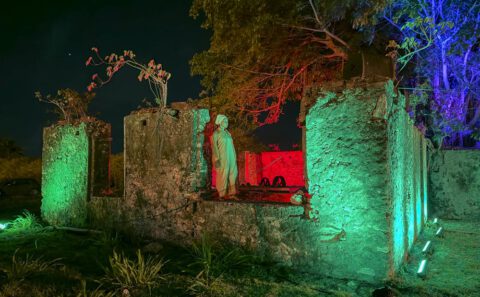
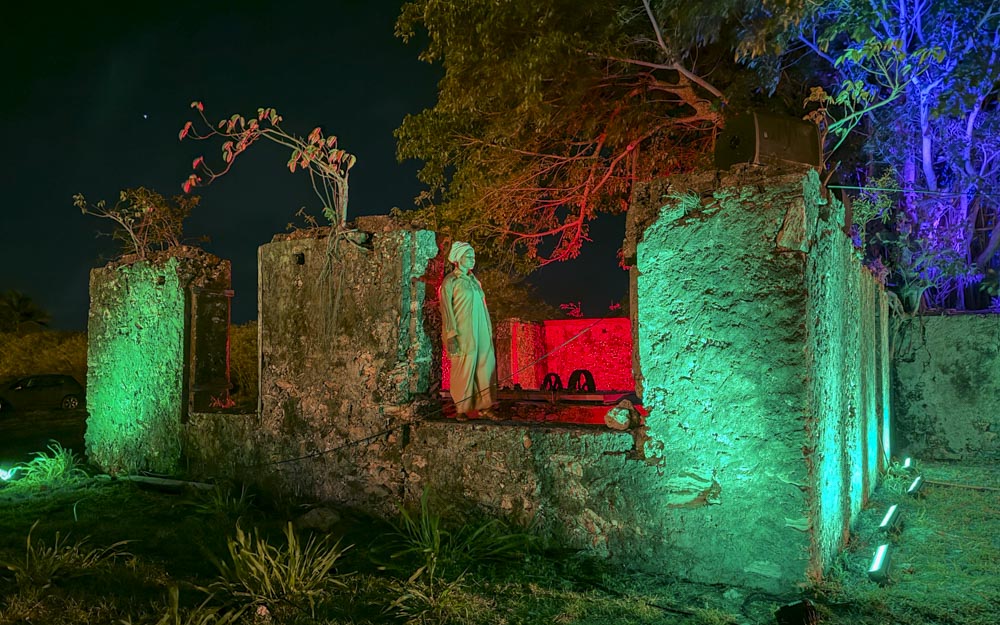
Au nom de Lucile is a site-specific immersive installation conceived for the ruins of La Mahaudière, a former sugarcane plantation in Anse Bertrand, Guadeloupe. Developed in collaboration with Depatement Guadeloupe & SEMAG, the work unfolds across three distinct architectural spaces – the Well, the Chimney, and the Mill – transforming each into a living field of memory, resistance, and ancestral presence.
Drawing on the history of enslaved women who lived and fought on this land, the installation weaves together generative sound, real-time video projection, and spatial interaction. Visitors become active participants: their movement triggers sequences of poetry, whispered voices, drum rhythms, and song – each encounter unique, unrepeatable.
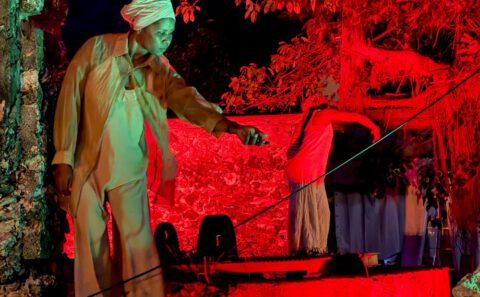
The Well
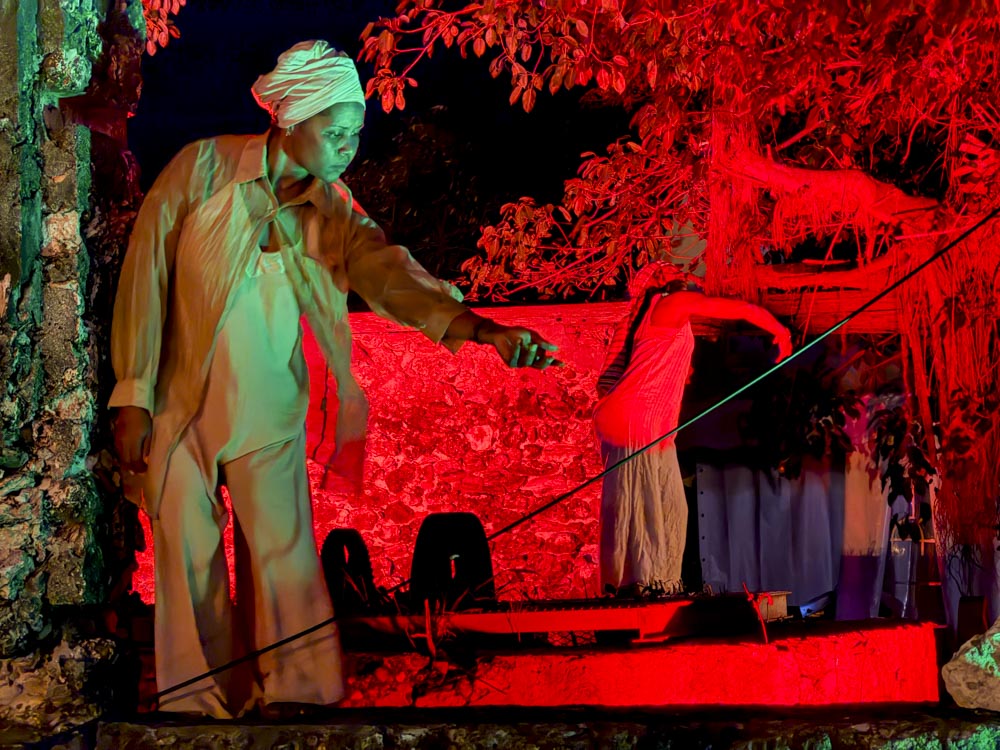
What was once called a cistern revealed itself, in the end, as a well — a threshold between the living and the remembered. Here, the voices of comedian Esther Myrtil and the songs of James Germain rose through the ruins and the ancient tree, filling the air with a presence at once tender and unbreakable. Dancers Natty Montella and Stell Seba moved through this charged space, their bodies awakening cascades of light and sound — each step a conversation with those who came before, each gesture an offering to the earth beneath their feet.
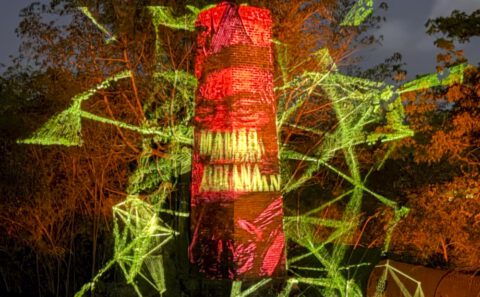
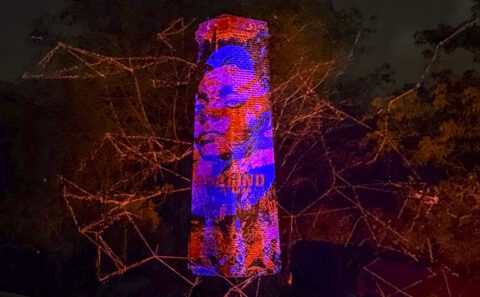
The Chimney
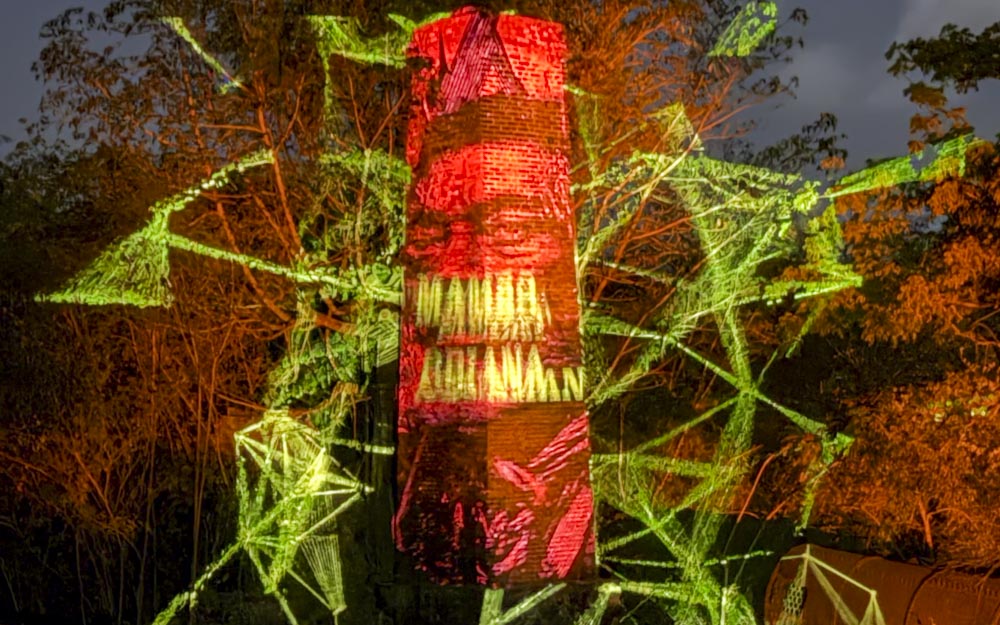
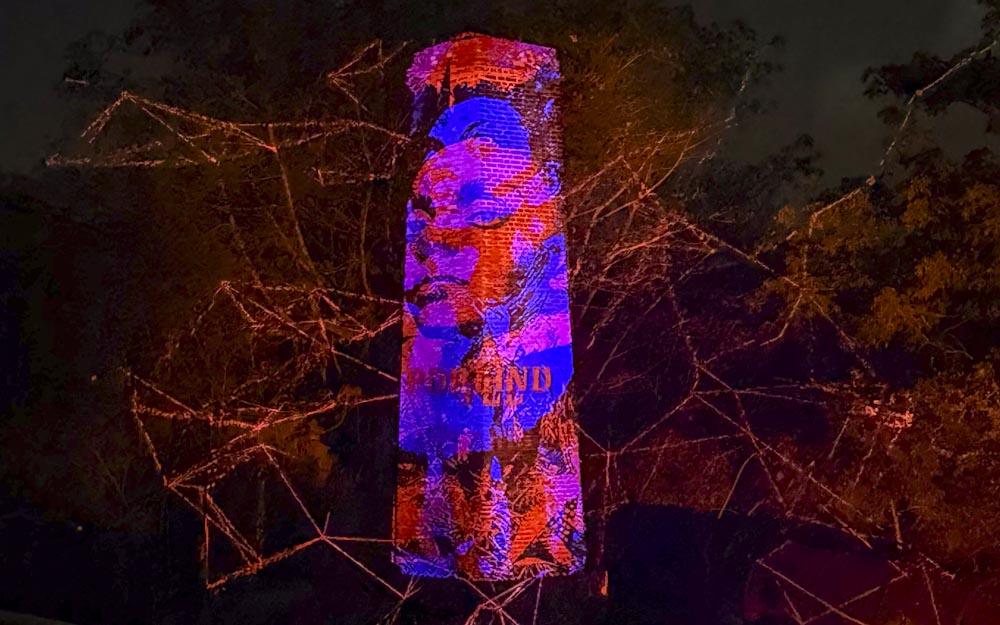
From the Well, the dancers carried their fire to the Chimney. There, the incandescent voice of Fanswa Ladrezeau soared over projected portraits — faces full of pride, full of quiet defiance — cast in light against stone. His incantations became an invitation, and the crowd answered: Liberté. Again and again, voices rising in unison, the ruins trembling with what they had long held silent.
The Mill
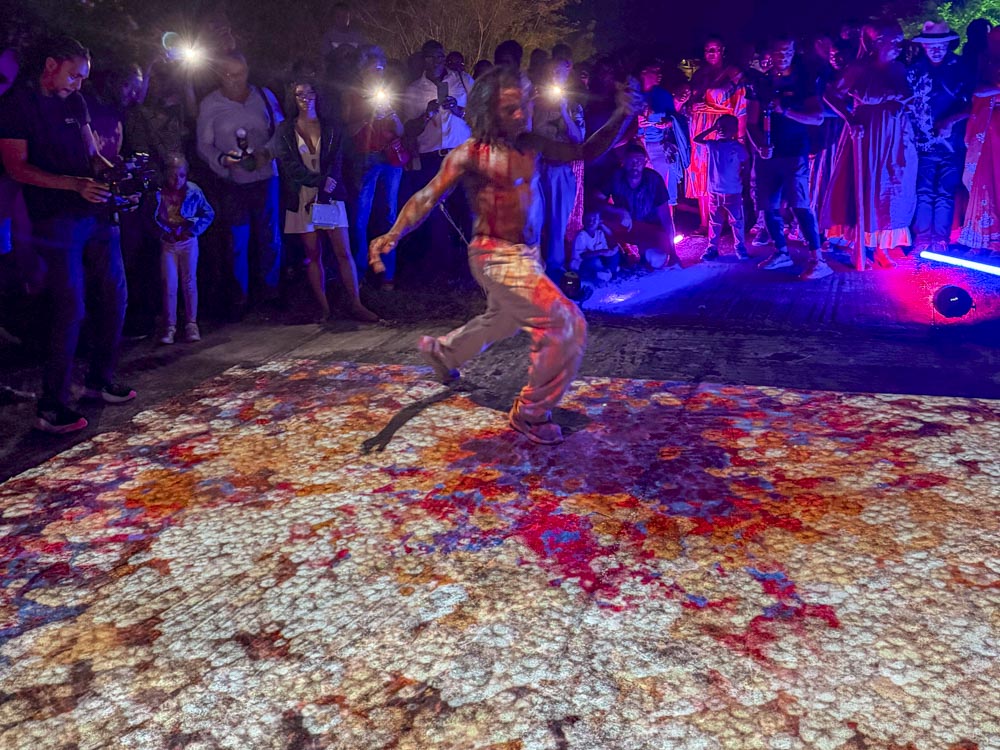
At the Mill, dancer Ovide arrived alone — in stillness, in devotion. Moving through a field of cotton flowers brought to life by infrared light, he became wind, he became soul. His body flowed through the luminous blooms like breath through memory, like water through time. With each wave, each ripple of movement, the departed were summoned gently upward — through sweat, through blood, through grace — reaching, at last, toward the surface.
Au nom de Lucile is rooted in the conviction that ancestral memory is not past — it is present, embodied, and waiting to be activated.